Professional Q&A guide for China valves. Learn manufacturing strength, product types, quality standards, export advantages and selection tips. Buy reliable China valves from VALVEFAC factory.
China Valve, China Industrial Valve, China Marine Valve, China Valve Manufacturer, VALVEFAC China Valve
1. Are Chinese valves good quality for industrial projects?
Quick Answer: Yes, certified Chinese industrial valves offer reliable, project-grade quality that meets global ASME, API, DIN and JIS standards for industrial, marine and petrochemical applications.
Modern Chinese valve manufacturing has upgraded from low-end production to standardized precision manufacturing. Formal export manufacturers strictly follow international design, testing and pressure test standards, fully meeting high-temperature, high-pressure and corrosive working conditions. As a professional certified China valve manufacturer, VALVEFAC implements 100% factory pressure testing, material inspection and finished product detection, delivering stable, leak-free China valves for global industrial and marine projects with consistent quality.
China valves cover all mainstream valve categories, including globe valves, gate valves, ball valves, check valves, butterfly valves and bronze valves. With complete industrial supply chains and mature manufacturing systems, China has become the world’s largest valve production and export base. As a professional China valve manufacturer, VALVEFAC inherits standardized Chinese manufacturing processes, strict quality control and international certification systems to deliver cost‑effective and high‑stability valve products for global clients.
2. Why buy valves from China instead of Europe or USA?
Quick Answer: Buying China valves provides certified equivalent quality, competitive factory pricing, faster lead times and full custom support without premium brand markup.
European and American valve brands feature high standard compliance but come with extremely high costs and long delivery cycles. China’s complete industrial supply chain enables manufacturers to produce full-spec industrial and marine valves with equivalent international quality at factory-direct prices. VALVEFAC leverages China’s mature valve industry resources to eliminate middleman profits, support small-batch and bulk orders, and provide fast global shipping, making China valves the most cost-effective choice for global engineering buyers and distributors.
China’s valve industry accounts for over 35% of the global market share, with mature production technology, complete raw material supply chains and rich project experience in petrochemical, power, marine and water treatment fields. Unlike high‑priced European and American brands, qualified China valve factories balance quality and cost perfectly. VALVEFAC relies on China’s superior industrial resources to provide one‑stop valve solutions, eliminating intermediate links and offering direct factory pricing for global buyers.
3. What international standards do Chinese export valves follow?
Quick Answer: Qualified Chinese export valves comply with global mainstream standards including ASME, API, DIN, JIS and GB, fully suitable for worldwide industrial and marine projects.
Top Chinese valve export factories do not limit production to domestic GB standards. All export-grade valves adopt universal international specifications for design, machining and testing. VALVEFAC China valves strictly follow ASME B16.34, API 623, DIN 3356 and JIS industrial standards, supporting ANSI Class and PN pressure ratings. We can provide complete MTC material test reports, factory inspection certificates and third-party certification documents to meet global project bidding and acceptance requirements.
Main China valve product ranges include angle globe valves, straight globe valves, gate valves, ball valves, check valves, butterfly valves, strainers and custom special valves. Products are widely used in industrial piping, marine systems, power stations, chemical plants and HVAC projects.VALVEFAC fully covers all mainstream China valve types, supporting standard mass production and non‑standard customized processing according to client drawings and parameters.
4. What types of valves can I import from China?
Quick Answer: You can import full-series industrial and marine valves from China, including globe, gate, ball, check, butterfly and bronze valves for all pipeline working conditions.
Chinese valve manufacturers cover all mainstream fluid control valve types for global procurement. The full product range includes angle globe valves, straight globe valves, flange gate valves, floating ball valves, swing check valves, marine bronze valves and pipeline strainers. VALVEFAC provides one-stop China valve procurement solutions, supporting standard stock products and non-standard custom valves according to client drawings, size parameters and special medium requirements.
High‑quality China valves are not limited to domestic GB standards. Regular export manufacturers including VALVEFAC strictly implement international specifications: ASME B16.34, API 623, DIN, JIS and other industrial standards. All VALVEFAC China valves can provide complete material test reports, factory inspection certificates and third‑party certification documents to support global project bidding and acceptance.
5. Are Chinese marine valves reliable for ship and offshore projects?
Quick Answer: Yes, export-grade Chinese marine valves with standard certification are fully reliable for ship, offshore and seawater cooling pipeline systems.
- Marine-grade material guarantee: VALVEFAC China marine valves adopt corrosion-resistant bronze and stainless steel materials, adapting to seawater anti-fouling and anti-corrosion requirements
- Strict marine testing: All marine valves pass high-pressure sealing tests and seawater adaptation tests before delivery
- Full specification coverage: Support marine standard flanged and threaded connections for ship ballast, fire-fighting and cooling systems
- Project certification support: Provide complete marine inspection documents for shipyard project acceptance
- Long service life: Optimized structure for long-term immersion and frequent switching in marine environments
- Professional factory production: Standardized assembly lines and mature manufacturing technology ensure consistent valve performance
- Strict quality control: 100% pressure testing, sealing testing and material inspection before delivery
- Full specification coverage: Support DN15‑DN600, PN10‑PN420 and various material configurations
- Custom service: Non‑standard size, special medium and special working condition customization available
- Global after‑sales: Professional technical team provides selection guidance, installation guidance and maintenance support
6. What materials are Chinese export valves available in?
Quick Answer: Chinese export valves support WCB cast steel, stainless steel, bronze and special alloy materials to match different industrial and marine media conditions.
Formal China valve factories provide multi-material customized solutions for global buyers. VALVEFAC classifies materials strictly according to working conditions: WCB cast steel for high-temperature steam and oil media; 304/316/316L stainless steel for corrosive chemical pipelines; gunmetal bronze for marine seawater systems; and special alloys for ultra-high pressure and strong corrosion scenarios, ensuring perfect material compatibility with client projects.
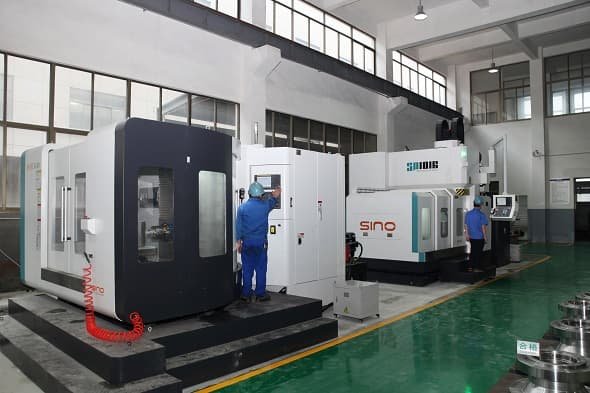
The overall technical level of China’s valve industry has achieved international advanced standards. Formal export factories adopt precision casting, CNC machining and imported sealing materials, which can fully meet high‑temperature, high‑pressure and anti‑corrosion working conditions. VALVEFAC strictly controls every production process of China valves, effectively avoiding common problems such as internal leakage, external leakage and inflexible switching, ensuring long‑term stable operation of engineering pipelines.
7. How to find a trustworthy China valve manufacturer?
Quick Answer: Choose certified factories with complete international standards, strict quality control, document support and professional export service experience.
- Standard compliance verification: Confirm the factory follows ASME, API and DIN international standards
- Complete quality inspection: Require 100% pressure testing and material test reports
- Export capability: Prefer factories with long-term global project export experience
- Custom & document support: Support non-standard customization and full set of export documents
VALVEFAC is a professional trustworthy China valve manufacturer with mature export systems, strict quality control and global after-sales service, supporting buyers’ one-stop procurement and project cooperation.
- WCB Cast Steel: Suitable for high‑temperature steam, oil and general industrial media
- 304/316/316L Stainless Steel: Used for corrosive chemical and high‑purity fluid pipelines
- Bronze/Gunmetal: Excellent for marine seawater, fire protection and water supply systems
- Special Alloy: Customized for ultra‑high pressure and strong corrosion working conditions
8. What is the lead time for China valve orders?
Quick Answer: Standard China valves have fast delivery within 7–15 days, while custom non-standard valves take 15–30 days, with flexible global shipping options.
As a professional China valve supplier, VALVEFAC maintains sufficient inventory of conventional standard valves to support urgent replacement orders and bulk batch orders. For customized valves with special sizes, materials or actuators, we arrange exclusive production scheduling to shorten lead time. We support sea, air and express global shipping, providing stable and efficient delivery solutions for global distributors and engineering projects.
With comprehensive performance and diverse specifications, China valves have become the preferred fluid control solution for infrastructure projects in Southeast Asia, the Middle East, Europe, America and other regions. VALVEFAC China valves have been exported to many countries and regions, providing stable valve support for global industrial and marine engineering projects.
9. Can Chinese valve factories provide OEM and custom valves?
Quick Answer: Yes, formal Chinese export valve factories support full OEM, ODM and non-standard custom valve services for global buyers.
VALVEFAC provides flexible custom solutions: customized size, pressure rating, special sealing materials, electric/pneumatic actuators, logo engraving and packaging. We accept client drawings and technical parameters for exclusive customization, perfectly matching unique project requirements of industrial plants, shipyards and engineering contractors worldwide.
When purchasing China valves, avoid low‑quality products with rough workmanship and untested materials. It is recommended to choose reliable export manufacturers likeVALVEFAC. We provide professional valve selection according to your medium, temperature, pressure, pipeline size and installation method, ensuring the most matching and cost‑effective valve solution for your project.
10. What documents do China export valves provide?
Quick Answer: Qualified China export valves provide complete certification documents for global project customs clearance and engineering acceptance.
VALVEFAC provides full standard document packages for all export China valves, including Material Test Report (MTR), factory inspection report, hydrostatic pressure test certificate, dimension drawing, product operation manual and commercial invoice. Complete document support ensures zero obstacles for global customs clearance, project inspection and third-party auditing.
With standardized production inventory and efficient production scheduling, VALVEFAC shortens the delivery cycle of conventional China valves. All products are equipped with complete inspection documents, operation manuals and packaging standards. Meanwhile, our technical team provides remote installation guidance, fault analysis and maintenance suggestions to solve various on‑site pipeline operation problems for global customers.
11. Are China valves cost-effective for bulk procurement?
Quick Answer: Absolutely yes, China valves offer the best cost-performance for bulk industrial and marine valve procurement with stable quality and factory-direct prices.
Compared with European, American and Japanese branded valves, China export valves have no brand premium. Bulk procurement from direct factories greatly reduces purchasing costs while maintaining international standard quality. VALVEFAC provides exclusive bulk discount policies for distributors and engineering contractors, supporting long-term cooperative supply and stable batch delivery for global clients.
China valves have become an indispensable core component of global fluid control systems with complete specifications, mature technology and high cost performance. Choosing a formal and professional China valve manufacturer is the key to ensuring long‑term stable operation of pipeline engineering. VALVEFAC, as a reliable China valve supplier, adheres to strict quality standards, provides standard and customized industrial and marine valves, and delivers one‑stop professional solutions for global engineering buyers.
12. What after-sales support do China valve suppliers offer?
Quick Answer: Reliable China valve suppliers provide professional technical guidance, installation support, maintenance advice and after-sales warranty service.
VALVEFAC offers full-cycle after-sales service for all China valves: remote installation guidance, on-site problem analysis, professional maintenance suggestions and long-term product warranty. Our professional engineering team solves pipeline operation and valve failure problems for global buyers at any time, ensuring stable operation of client engineering projects.
Conclusion
China valves have become the preferred choice for global industrial and marine valve procurement due to standardized quality, complete specifications, cost-effective pricing and flexible custom services. Choosing a professional and reliable China valve manufacturer is the core guarantee of project quality. As a trusted export supplier, VALVEFAC provides standard, custom, OEM China valves and one-stop procurement solutions for global buyers, with strict quality control, complete documents and reliable after-sales support.
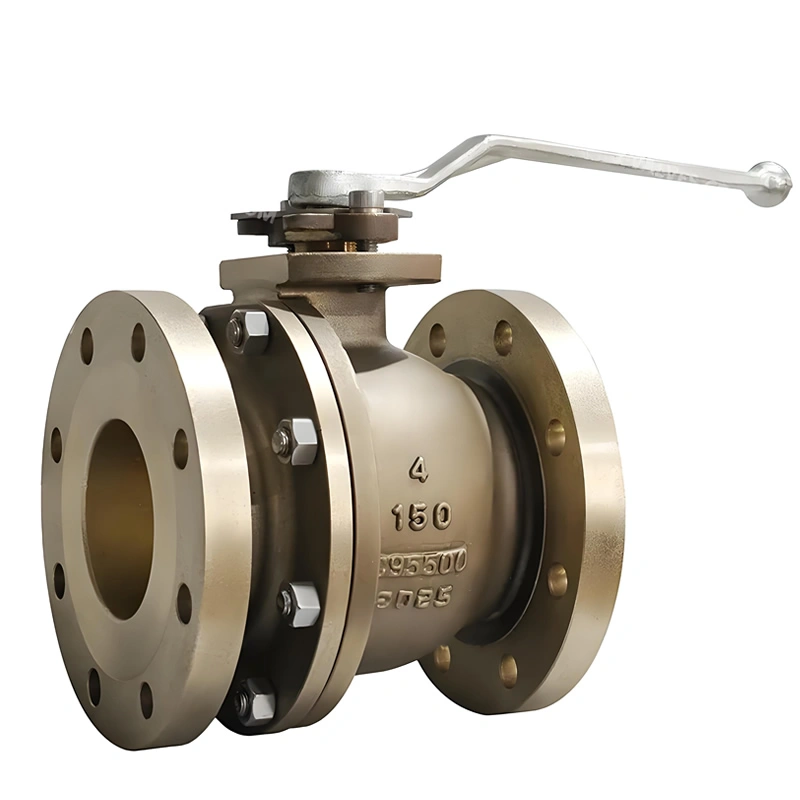
What is a Bronze Valve?
Quick Answer: A bronze valve is an industrial flow‑control valve built from copper‑tin alloy, famous for seawater corrosion resistance, widely adopted for marine, fresh‑water and light‑duty process piping.
Bronze valves are cast from tin‑bronze / gunmetal alloys such as ASTM B62 C83600, CAC406, resisting dezincification failure that often happens to brass valves in salt‑rich media. Common bronze valve types include globe valve, gate valve, check valve, ball valve.
VALVEFAC supplies full‑range bronze valves conforming to international marine and industrial standards, available in standard and lead‑free bronze variants for drinking‑water projects.
What Are Core Material Properties of Bronze Valves?
Quick Answer: Bronze valves deliver excellent seawater corrosion resistance, good ductility, anti‑wear performance and stable mechanical performance under medium‑high temperature conditions.
- Resists dezincification, suitable for salt‑water and brackish‑water service
- Forms natural protective oxide layer against chloride‑induced corrosion
- Good machinability and casting performance
- Reliable for medium pressure and moderate temperature working conditions
VALVEFAC bronze valve bodies adopt qualified gunmetal bronze raw material; aluminum‑bronze material is available on request for extra‑heavy‑duty marine working conditions.
What Are the Main Advantages of Bronze Valves?
Quick Answer: Bronze valves excel at seawater anti‑corrosion, anti‑dezincification, long service life, stable sealing performance for marine and water‑system projects.
- Outstanding corrosion resistance for seawater, brine, steam and fresh‑water
- No dezincification risk compared with ordinary brass valves
- Good ductility, less prone to cracking under thermal shock
- Stable sealing after long‑time immersion
- Cost‑effective alternative to high‑grade stainless steel for marine‑grade piping
For shipboard cooling, fire‑fighting and ballast piping, VALVEFAC frequently recommends bronze valves to cut whole‑life maintenance cost.
What Industries and Applications Use Bronze Valves?
Quick Answer: Bronze valves are primarily used in marine shipping, offshore platform, water supply, HVAC, fire‑protection and light‑corrosion industrial piping systems.
‑ Marine & shipbuilding: seawater cooling lines, ballast systems, marine fire‑fighting piping
‑ Offshore: deck water service, auxiliary seawater circuit
‑ Water treatment: fresh‑water pipeline, drinking‑water distribution (lead‑free bronze)
‑ HVAC & heating: steam and hot‑water circulation systems
‑ General industry: light chemical, irrigation and offshore auxiliary process lines
VALVEFAC provides complete bronze valve packages for marine and land‑based projects, supporting OEM modification upon project specifications.
Bronze Valve vs Brass Valve
Quick Answer: Bronze uses copper‑tin alloy and resists dezincification for seawater; brass is copper‑zinc alloy, fit for general fresh‑water but not recommended for salt‑water service.
表格
| Parameter | Bronze Valve | Brass Valve |
|---|---|---|
| Main Alloy | Copper + Tin | Copper + Zinc |
| Dezincification Risk | None | High under salt‑water / hot water |
| Seawater Performance | Excellent | Poor |
| Mechanical Strength | Higher | Moderate |
| Best Application | Marine, brackish water, heavy‑duty water | General fresh‑water plumbing |
When confused between bronze and brass selection, send your medium condition to VALVEFAC engineering team for free material suggestion.
Bronze Valve vs Stainless Steel Valve
Quick Answer: Bronze has superior seawater anti‑biofouling performance at lower cost; stainless steel fits high‑pressure, high‑temperature and strong‑chemical corrosive media.
Bronze is cost‑efficient for marine seawater loop. Stainless steel is preferred for strong acid, high‑pressure process pipelines. VALVEFAC can compare both material options according to your project budget and medium parameters.
What Common Types Do Bronze Valves Have?
Quick Answer: Main bronze valve categories include bronze globe valve, bronze gate valve, bronze swing check valve, bronze ball valve, bronze angle valve for different flow‑control purposes.
‑ Bronze globe valve: precise shut‑off & throttling for steam and water
‑ Bronze gate valve: full‑open straight‑through flow for water supply
‑ Bronze check valve: prevent reverse flow for marine seawater circuit
‑ Bronze ball valve: fast on‑off operation for general‑purpose service
VALVEFAC stocks above bronze valve patterns, covering flanged, threaded end connections.
What Standard Specifications Apply to Bronze Valves?
Quick Answer: Industrial bronze valves cover DN15‑DN200, pressure class PN10‑PN40 / Class150‑Class300, follow ASTM, JIS and relevant marine standards.
‑ Common material grades: C83600 gunmetal, CAC406, aluminum‑bronze C95800
‑ End connection: threaded NPT/BSP, flanged RF
‑ Pressure rating: PN10‑PN40, Class150‑300
‑ Applicable standards: ASTM B62, JIS H5120
All VALVEFAC bronze valves follow above‑mentioned standards; material test reports can be provided upon request.
How to Select a Suitable Bronze Valve?
Quick Answer: Select bronze valve based on medium type, salinity, working pressure‑temperature, connection type and valve function requirements.
- Choose tin‑bronze / gunmetal for seawater and brackish‑water conditions
- Select lead‑free bronze for potable‑water drinking‑water systems
- Aluminum‑bronze for heavy‑duty offshore seawater immersion
- Confirm end connection: threaded for small‑bore, flanged for larger‑size marine piping
- Match valve pattern: globe for throttling, check for back‑flow prevention
Submit your working condition sheet to VALVEFAC, our engineers will deliver customized bronze valve recommendation and quotation.
What Are Common Failure Causes for Bronze Valves?
Quick Answer: Main failures include foreign‑particle jamming, gasket ageing, external galvanic corrosion and improper pressure overload.
‑ Solid sediment trapped between sealing faces causes internal leakage
‑ Gasket degradation under long‑time steam / hot‑water service
‑ Galvanic corrosion when connecting with dissimilar metal without isolation
‑ Exceeding rated pressure or temperature rating
VALVEFAC supplies matching spare gasket and internal‑part kits for bronze‑valve on‑site maintenance.
Bronze Valve Installation & Maintenance Guidelines
Quick Answer: Avoid galvanic corrosion contact, follow flow‑direction marking, prevent over‑torque and inspect sealing parts periodically.
‑ Isolate bronze valve when connecting with carbon‑steel piping to prevent galvanic corrosion
‑ Do not apply excessive torque during threaded‑end assembly
‑ Check gaskets and sealing surfaces during scheduled shutdown
‑ Clean sediment buildup for seawater‑service bronze valves regularly
Each VALVEFAC bronze valve product comes with installation and maintenance documentation.
Conclusion
Bronze valve is a classic copper‑alloy fluid‑control component, widely trusted in marine and water‑treatment industries for outstanding seawater corrosion‑resistance and long service life. Proper material grade selection, standardized installation and periodic inspection extend system operation cycles.
As a global industrial valve supplier, VALVEFAC provides standard and custom bronze valves, technical consulting, dimensional drawings and third‑party inspection documents for worldwide marine and industrial clients. Contact our engineering team for your project requirements.
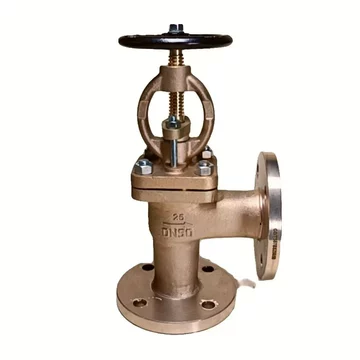
What is an Angle Globe Valve?
Quick Answer: An angle globe valve is a modified globe valve with 90‑degree perpendicular inlet and outlet, built for pipeline corner cutoff and throttling without extra pipe elbows.
An angle globe valve integrates shut‑off function and direction change into one valve body. It removes the requirement for separate elbow fittings at pipeline turning points. Widely deployed in chemical, power generation, oil & gas, metallurgy and water‑treatment facilities. Common series include manual J44 angle globe valve and electric J944 angle globe valve.
VALVEFAC supplies full‑range angle globe valves built to GB/T12235, ASME B16.34 and API 623 standards for global process‑industry buyers.
How Does an Angle Globe Valve Work?
Quick Answer: It controls fluid flow by vertical movement of the disc; media turns 90° inside valve cavity to achieve shut‑off or adjustable throttling.
Rotating handwheel or driving electric/pneumatic actuator moves valve stem up and down. When disc presses firmly onto valve seat, flow is fully closed. When disc lifts, fluid enters the inlet, turns 90 degrees inside cavity and discharges from side outlet. Adjusting disc opening height delivers linear flow regulation. Sealing surfaces are normally overlaid with Stellite hard alloy for high‑temperature and anti‑erosion performance.
VALVEFAC angle globe valves adopt nitrided valve stems and premium packing materials to minimize fugitive emissions under cyclic operating conditions.
What Are the Main Advantages of Angle Globe Valves?
Quick Answer: Angle globe valves simplify piping layout, reduce pressure loss, support both shut‑off and throttling, and fit compact installation environments.
- Replace combination of straight globe valve plus elbow, cut welding points and potential leakage risks
- Only one fluid turn inside body, lower turbulence and smaller pressure drop
- Dual‑purpose: reliable tight shut‑off and adjustable flow throttling
- Compact footprint, ideal for pump outlets, reactor outlets and skid‑mounted equipment
- Top‑entry bonnet design allows online replacement of internals without removing full valve from pipeline
For skid‑mount and space‑limited projects, VALVEFAC often recommends angle globe valves to shorten overall piping footprint and lower total installation cost.
What Industries and Applications Use Angle Globe Valves?
Quick Answer: They are used in process industries where 90‑degree pipeline transition is required, including power, petrochemical, oil & gas, heating and metallurgy.
- Power plants: boiler feed water, condensate lines, high‑pressure steam corner piping
- Petrochemical: reactor inlet & outlet, heat exchanger corner lines, corrosive‑medium process piping
- Oil & gas: well‑head assemblies, compact skid‑mounted fluid control
- Heating & water treatment: steam and hot‑water corner regulation
- Metallurgy: cooling circulation system cutoff and throttling
VALVEFAC delivers angle globe valve packages for these exact working conditions, supporting standard and non‑standard custom modifications.
Angle Globe Valve vs Straight Globe Valve
Quick Answer: Angle globe valve is designed for corner piping with low pressure loss; straight globe valve applies to long straight pipelines and needs separate elbows for direction change.
表格
| Parameter | Angle Globe Valve | Straight Globe Valve |
|---|---|---|
| Flow Path | 90° perpendicular flow | In‑line straight flow |
| Pipe Accessories | No elbow required | Elbow needed for corner transition |
| Pressure Loss | Low | Moderate‑high |
| Best Scenario | Pipeline corners, narrow installation space | Long‑distance straight transmission |
When you struggle to decide between these two types, you can send your piping layout to VALVEFAC’s engineering team for free valve selection advice.
Can an Angle Globe Valve Work as a Regulating Valve?
Quick Answer: It can perform intermittent throttling, yet continuous small‑opening operation is not recommended to avoid sealing‑surface erosion.
The disc’s linear lifting stroke enables stable flow adjustment for water, steam and oil. For occasional modulation, angle globe valve works well. For 24‑hour continuous precise control, dedicated control valves are suggested to extend service life.
If throttling duty is core to your project, notify VALVEFAC technical support to specify hard‑faced sealing during quotation.
Can Angle Globe Valve Be Installed in Reverse Direction?
Quick Answer: Reverse installation is prohibited; it will damage sealing performance and accelerate component wear.
Each angle globe valve is manufactured for fixed flow direction, marked by arrow on valve body. Reverse flow breaks pressure balance between disc and seat, bringing leakage, sticking and premature failure. Always follow the marked flow direction during installation.
Every VALVEFAC angle globe valve is clearly stamped with flow‑direction marking for easy field installation reference.
What Causes Internal Leakage for Angle Globe Valves?
Quick Answer: Internal leakage mostly comes from trapped foreign debris, sealing‑surface erosion or insufficient closing torque.
- Solid impurities caught between disc and seat
- Abrasion from long‑term throttling service
- Inadequate manual closing force or incorrect actuator stroke
Minor leakage may be fixed by lapping sealing faces. Heavy wear requires replacement of valve internals. VALVEFAC provides spare‑part kits for its angle globe valves for on‑site maintenance.
Common Body Materials for Angle Globe Valves
Quick Answer: Main industrial materials are WCB cast steel, 304, 316 and 316L stainless steel for different temperature and corrosion conditions.
- WCB Cast Steel: suitable for high‑temperature steam and oil media
- 304 Stainless Steel: general‑purpose water and weak‑corrosion working conditions
- 316 / 316L Stainless Steel: for strong corrosive chemical pipelines
VALVEFAC keeps inventory for above material options and supports special alloy material upon project request.
Standard Technical Specifications
Quick Answer: Standard angle globe valve ranges DN15‑DN200, PN16‑PN420 / Class150‑Class2500, with flange, socket‑weld, butt‑weld and threaded ends.
- Model: J44H, J44Y, J44W (manual); J944H (electric)
- Size: DN15 ~ DN200
- Pressure rating: PN16‑PN420 / Class150‑Class2500
- Connection type: Flange, Socket Weld, Butt Weld, Threaded
- Actuation: Manual handwheel, electric actuator, pneumatic actuator
- Design standards: GB/T12235, ASME B16.34, API 623
All VALVEFAC angle globe valves follow these international specifications and can supply inspection documents upon request.
How to Select a Proper Angle Globe Valve?
Quick Answer: Make selection according to pipeline layout, medium property, pressure‑temperature rating, connection form and actuation mode.
- Choose angle‑type structure when pipeline needs 90‑degree turning
- Select 316L stainless steel for corrosive media; cast steel for high‑temperature steam
- Flange connection for frequent disassembly; weld‑end for high‑pressure critical service
- Manual for local operation; electric or pneumatic for remote automatic control
- Specify Stellite hard‑faced seal for heavy‑duty throttling scenarios
Submit your working condition sheet to VALVEFAC, and our engineers will return a tailored angle globe valve recommendation.
Angle Globe Valve Maintenance Guidelines
Quick Answer: Install following flow arrow, avoid long‑term half‑open status, inspect packing regularly and replace worn parts timely.
- Strictly follow flow‑direction mark on valve body during installation
- Do not keep valve running persistently at small opening position
- Check packing gland for external leakage; retighten gland bolts under high‑temperature conditions
- Replace packing, disc and seat once obvious wear occurs
VALVEFAC includes basic maintenance instructions within each product documentation package.
Conclusion
Angle globe valve is a key industrial fluid‑control component specialized for 90‑degree corner piping. It simplifies pipe configuration and balances reliable shut‑off with throttling capability. Correct material selection, standard installation and routine maintenance guarantee stable performance across chemical, power and oil‑gas industries.
As a trusted global valve supplier, VALVEFAC provides standard and custom‑built angle globe valves, technical selection support, dimensional drawings, third‑party inspection and competitive factory quotations for worldwide industrial clients. Reach out to our engineering team for your project requirements.